
About HRC

We’re a student-led robotics club at Purdue, building hardware and software for humanoid robots.

Club history
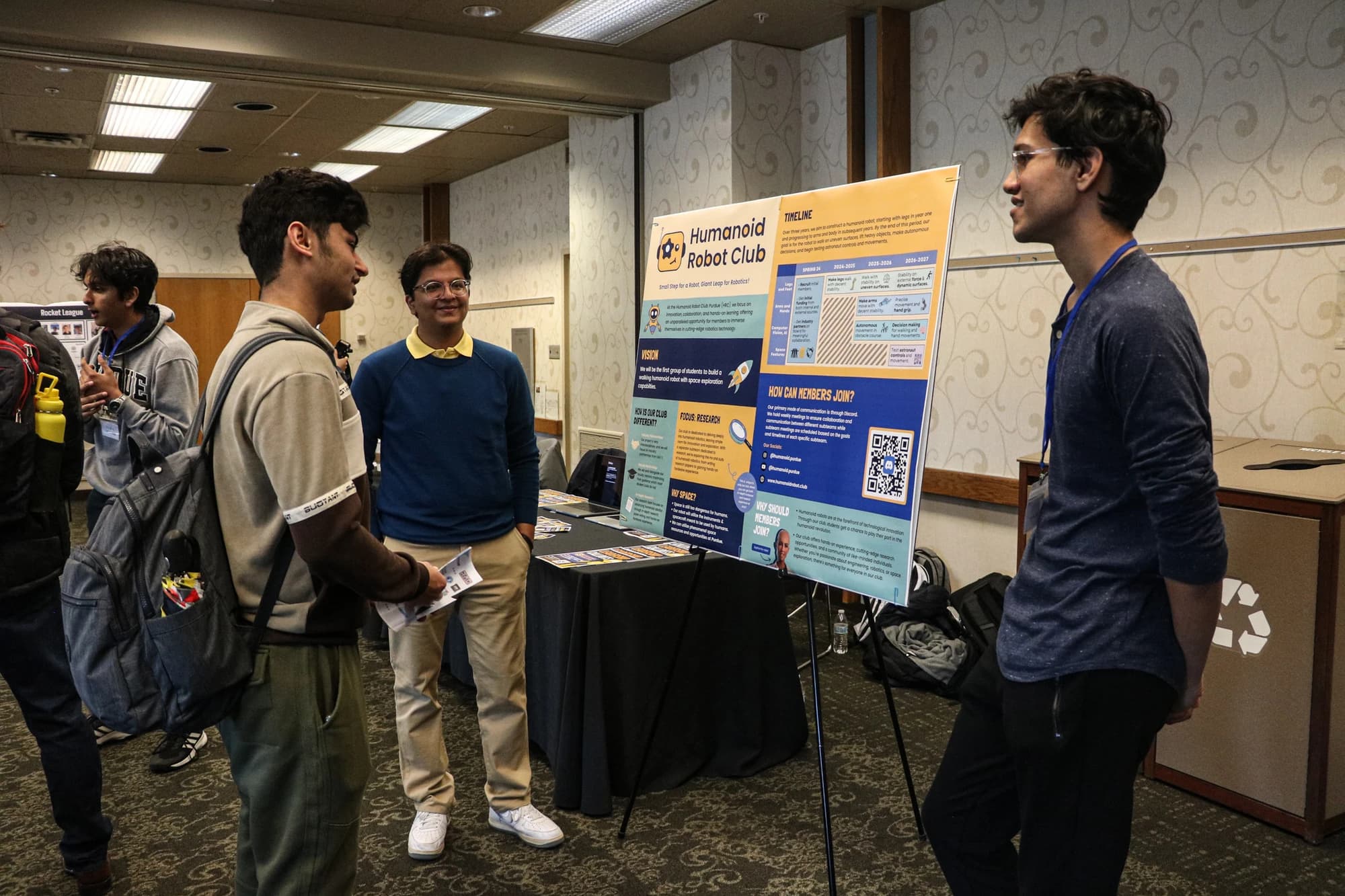
HRC members presenting the club’s research at Purdue

Why humanoids?

Spacecraft and tools are built for people. We’re developing a humanoid robot that could use them, starting with the mechanics and controls for reliable movement.

Explore NEMO
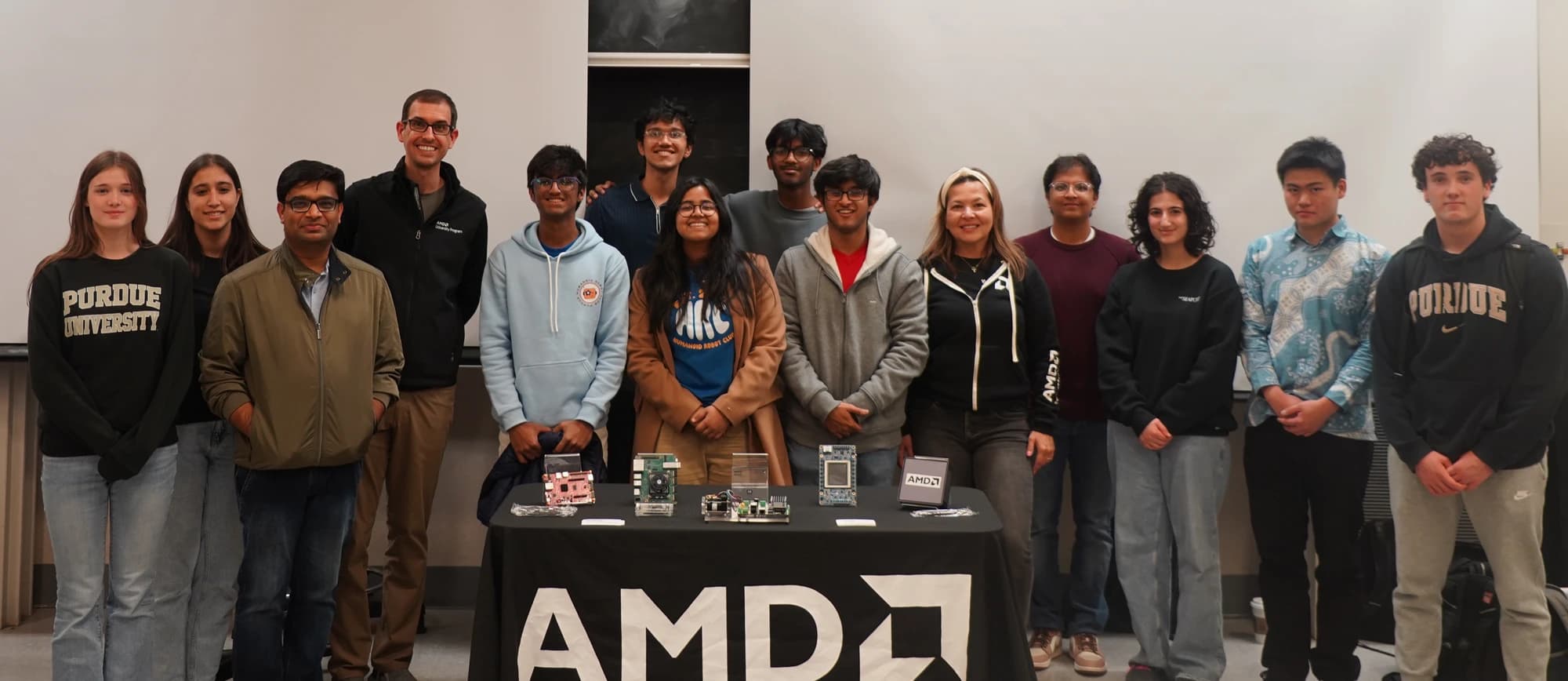
HRC members and industry supporters gathered around an AMD display
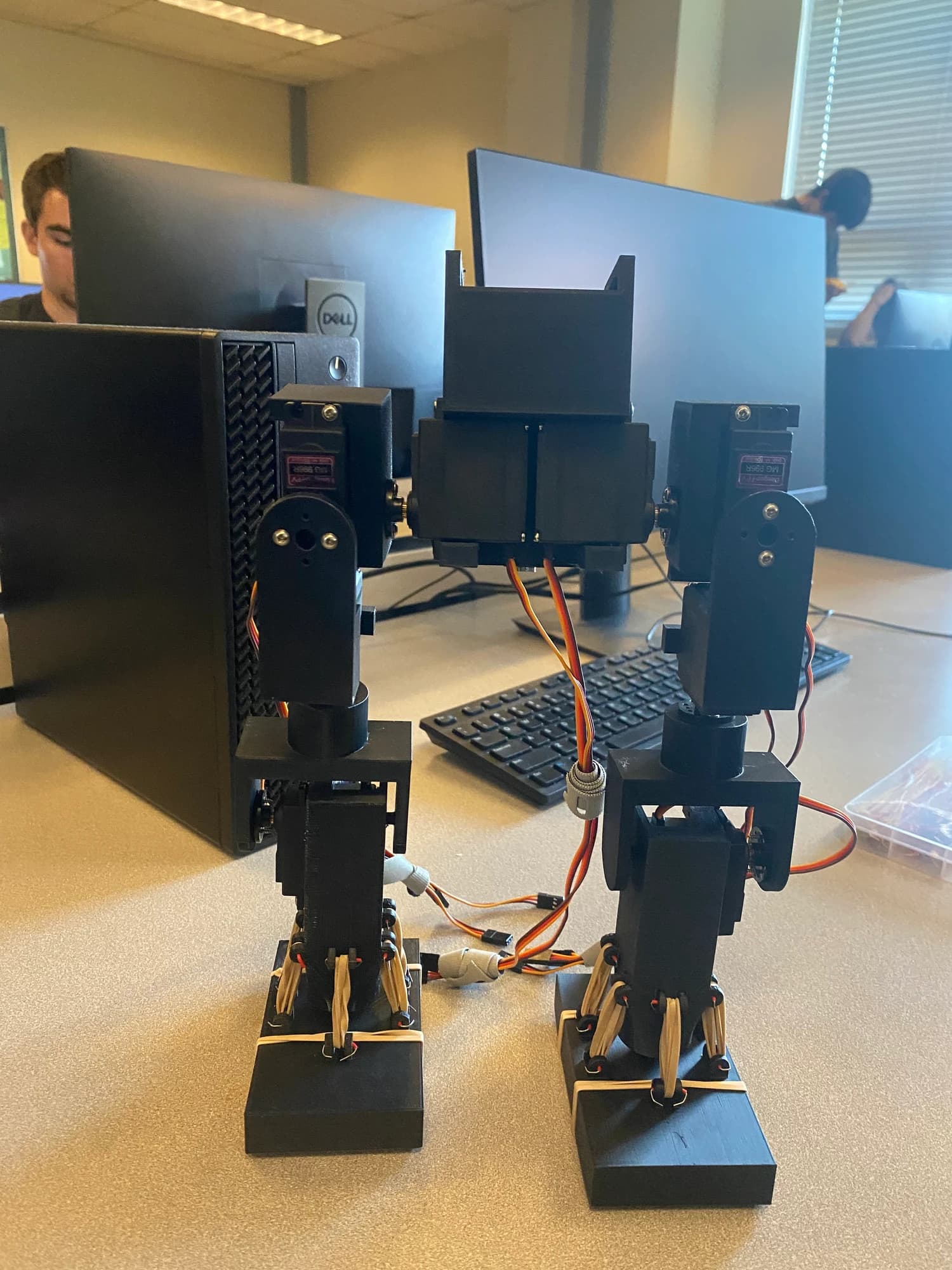
A pair of humanoid robot legs in the HRC lab
Concept schematic

Autonomous Robot Quadruped

An eight-degree-of-freedom robot cat, starting with a 3D-printed frame and Unitree M8010 motors. Vision and autonomous control will follow.

First semester
Build a 3D-printed frame with working dynamics and a direct-drive power delivery system.
Second semester
Integrate vision hardware and sensors for autonomous operation, then connect a reinforcement learning policy to the vision system.
Join this project
LEADERFOLLOWERConcept schematic

Tele-Operated Robotic Arm

A leader–follower arm in early development, exploring six degrees of freedom and interchangeable end effectors.

Initial direction
Define the mission and requirements for a six-degree-of-freedom arm, leader–follower control, and interchangeable end effectors.
Applications to explore
Manufacturing tasks, sorting, and AI/ML training. These are potential uses under consideration as the project takes shape.
Join this project

Technical subteams

Mechanical
Design frames, linkages, and motor mounts in CAD; manufacture components; and build test fixtures with documented design decisions.
Electrical
Select actuators and sensors, create schematics and PCBs, and prototype wiring, power delivery, and electrical connections for testing.
Software
Simulate robots in MuJoCo, develop reinforcement learning policies in JAX, combine sensor data, and integrate systems using ROS 2.

Our history

  1. A goal for space robotics

    The team studies HUBO, restores movement to its legs and fingers, and begins developing a robot that could use astronauts’ equipment.

    Read the original story
  2. NEMO walks in simulation

    NEMO achieves stable mid-air walking simulation with a learned control policy.

    Watch the milestone
  3. Ground walking tests

    The first ground tests bring the walking policy onto NEMO’s physical hardware.

    See NEMO walk
  4. New projects and StarkHacks

    HRC grows to 1,500+ members, backed by eight faculty advisors and $500K+ in support. StarkHacks brings 750+ builders from 10+ countries to Purdue, producing more than 150 hardware projects.

    Explore StarkHacks

What’s next

Development priorities, guided by hardware and simulation testing.

Reliable locomotion

Improve balance, real-time control, and reliable locomotion across uneven surfaces.

Manipulation and perception

Develop arms for precise manipulation and integrate computer vision with the robot’s decision-making.

Space-relevant operation

Explore space-relevant tasks, stronger materials, and operation in the challenging conditions of a spacecraft.

Build with us

Join HRC